
 3, ул. Пушкина, 140100, г. Самарканд, Узбекистан
  +998 90 655 05 00
  info@sacredeasttravel.com


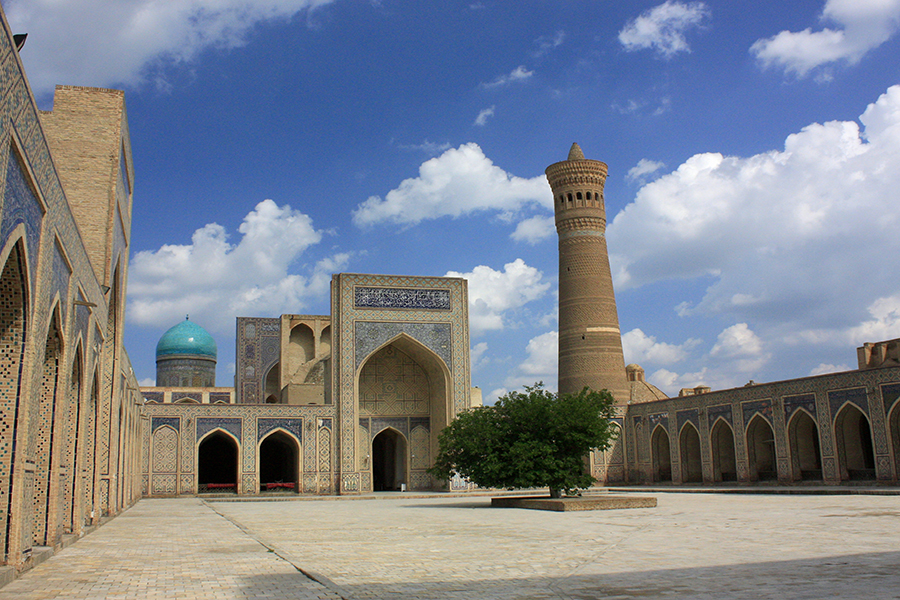
Архитектурный ансамбль Пои-Калян
Этот главный ансамбль в центре Бухары находится на пересечении торговых путей «четырех базаров», а Пои-Калян означает «подножие Великого» (или иначе «подножие минарета Калян»). Ансамбль включает в себя 4 элемента: мечеть Калян и медресе Мири-Араб обращенные друг к другу, между ними минарет Калян, и медресе Амир-Алимхана, что стоит южнее Мири-Араба.
On the site of the Arslan Khan mosque in the 15th century, the present Kalyan mosque is being erected, its finishing is completed in 1514, this is inscribed on the facade of the building. The ensemble takes a modern look in 1536, when Ubaidullah Khan is building a madrasah on the advice of Miri Arab Yemeni confidant. After Miri Arab’s death, his tomb is erected in the courtyard of a madrasah named after him, Ubaidullah himself is resting here. The mosque and the madrassah are on the same line with the facades of one another, forming a kosh(mirror).
Kalon Minaret is the oldest building in the square, it was built in 1127 by Arslan Khan and for almost 900 years has never been repaired. The minaret is one of the tallest buildings in Bukhara, its height is 46.5 meters with a lower diameter of 9 meters, the very construction of a conical shape with a lamp at the top. The minaret is richly decorated – the cylindrical body is lined with stripes of flat and relief masonry, revealing the roundness of the structure in any illumination. The dome of the lantern is not preserved.
The Kalyan Mosque (the Masjidi kalon – “The Great Mosque”) built under Ubaidullah Khan on the site of the destroyed Karahanid mosque, the construction was completed in 1514, the second largest mosque in Central Asia after the Bibi Mosque Khanum in Samarkand. It is made in the traditions of Timurid architecture and is decorated with mosaic.
Miri Arab Madrassah was built by Ubaidullah Khan for Sheikh Abdullah Yemeni in 1535-1536. The building is large enough – it contains 111 hujras and two cruciform halls: the first hall was used as a mosque and a lecture hall, the second was the burial vault of Ubaidullah Khan, Abdullah of Yemen and others. To find funds for the construction of the Miri Arab madrasah, Ubaidullah Khan sold 3000 captured Persians slaves and gave the money to Abdullah of Yameni.