
 3, Pushkin str., Samarkand 140100 Uzbekistan
  +998 90 655 05 00
  info@sacredeasttravel.com


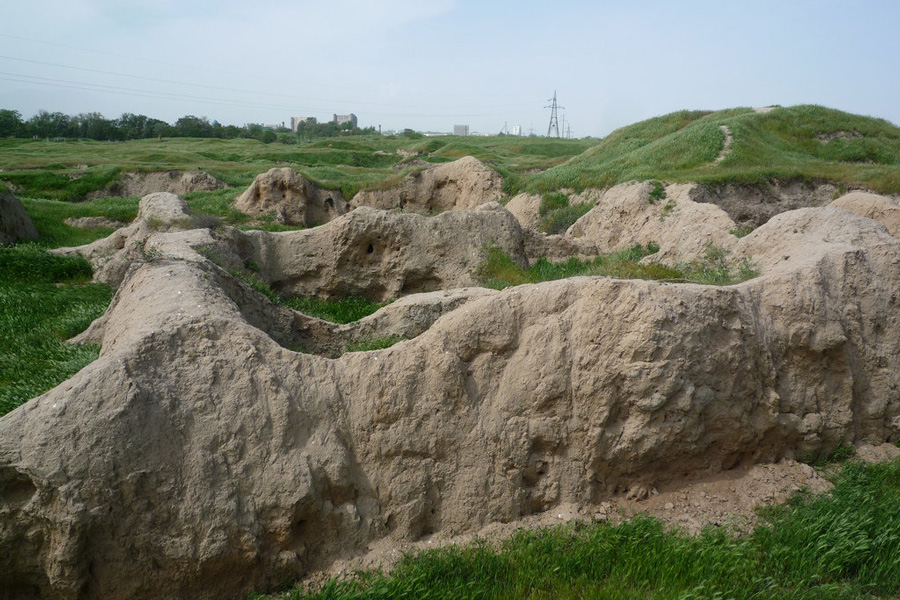
Site archéologique d'Afrasiab
A l'entrée de Samarkand du côté nord, il y a l'ancienne colonie d'Afrasiab (VII-II siècles avant JC), qui est située sur de hautes collines. Ce qui est étonnant, c'est qu'il n'y avait aucun signe de la ville et de la population locale appelée ce site comme la ville d'Afrasiab, croyant à la légende de l'existence de l'immense ville, fondée par le mythique roi Turan. En fait, c'est la colonie de l'ancienne Samarkand de la période pré-mongole. C'était le site de la vie urbaine du VI siècle avant JC jusqu'à la destruction par les troupes mongoles en 1220.
Souffrant des invasions de nombreux conquérants, Samarkand n'a pas pu résister à l'invasion de Gengis Khan. Le grand dirigeant mongol a ordonné de ruiner la ville jusqu'au sol. Les gens étaient tellement ébranlés par l'acte de Genghis Khan qu'ils n'oseraient plus coloniser cette terre. Revenant aux ruines de Samarkand, ils s'installèrent au pied de cette colline. Maintenant, Samarkand longe l'immense terrain vague - l'ancienne ville d'Afrasiab. Au cours des fouilles, il a été déterminé que la ville d'Afrassiab se composait d'une forteresse, du centre-ville et de la périphérie. Dans le centre-ville, les chercheurs ont trouvé des quartiers résidentiels et artisanaux, la mosquée, vestiges du palais du souverain de Samarkand (VII-VIII siècles), où ils ont trouvé une magnifique fresque, consacrée aux événements de la vie de la ville. La Musée d'Afrasiab est situé sur le même site et présente la collection de découvertes archéologiques, réalisées sur le site de cette ville antique.
Also on Afrosiab was found a large hall, decorated with wooden sculptures, charred from a fire that destroyed the city thirteen centuries ago. During the excavations, bas-reliefs of a landscape character were also found. In the 9th-10th centuries, when Samarkand became one of the cultural centers of the Islamic East and the first capital of the Samanid dynasty, a magnificent royal palace was built in the western part of Afrasiab. By the 10th century, the inner part of the city had reached 220 hectares. To the south of it was located a suburb with bazaars, mosques, baths and caravanserais. A water pipe from lead pipes “Arsis” was built in the city and paper production was arranged. In the 11th-13th centuries Samarkand became the capital of the Karakhanid state and was surrounded by new defensive walls. In the citadel the palace of the Karakhanids was erected. At the beginning of the 13th century Khorezmshah Muhammad seized Samarkand and built a new palace on the site of the Karakhanid palace. In the 13th century, the state of Khorezmshah was conquered by Genghis Khan, Samarkand was captured by the Mongols. During the internecine wars of the second half of the 13th century, Samarkand suffered greatly, and this led to the complete desolation of the ancient settlement on Afrasiab. Later, Samarkand already developed on the site of the former “rabad” – the urban suburb.
The Museum of the history of the city, located on the site of the ancient settlement Afrosiab, contains exhibits from different periods of the ancient history of Samarkand – ossuaries, remains of ancient blades, knives, arrows, coins, ceramics, and unique frescos discovered during excavations on the site.
After visiting the Museum, you can also wander through Afrosiab, from the height of the hills admire the panorama of the old city, its blue domes and minarets. Here, to the sound of the winds and the rustle of the grass, your thoughts will pass unnoticed into the past …