
 3, Pushkin str., Samarkand 140100 Uzbekistan
  +998 90 655 05 00
  info@sacredeasttravel.com


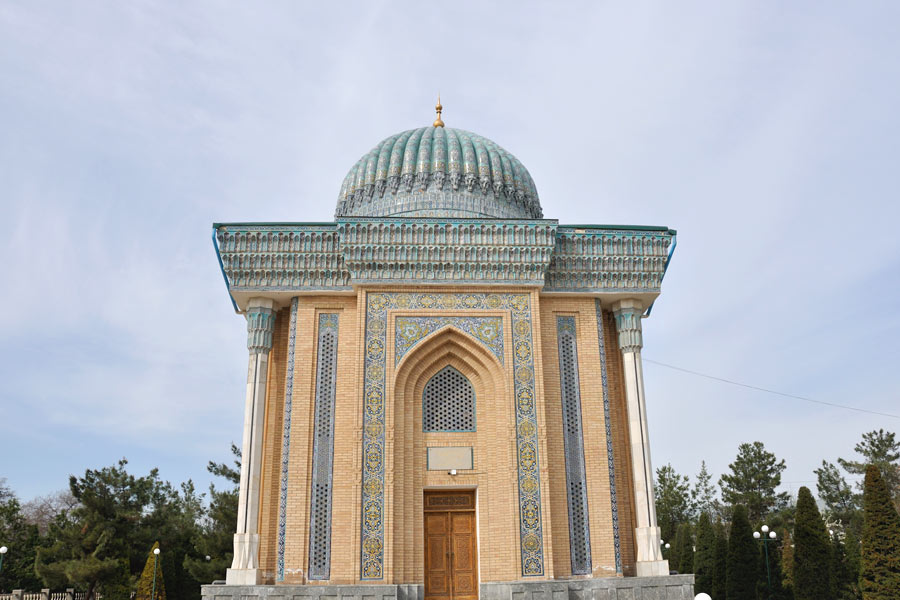
Mausolée de l'Imam al-Moturidi
Le tombeau de l'Imam al-Moturidi est un autre lieu sacré de Samarkand. Le grand imam et célèbre philosophe et théologien s'est battu pour la pureté de l'islam. Il y fut enterré en 944, au cimetière Chokardiza où de nombreux autres scientifiques célèbres du monde de l'islam furent également enterrés. Il était une fois une forteresse militaire ici, donc le cimetière a un tel nom: «Chokar» signifie «armée» «Disa» signifie une forteresse. En 1947, le cimetière a été rasé. Il y a dix ans, la tombe a été retrouvée pour la visite, elle n'a été ouverte que le 17 novembre 2000. En 2000, l'anniversaire de 1130 ans de l'imam al-Moturidi a été largement célébré. Le mausolée a été restauré à Chokardiza et l'ensemble du territoire a été aménagé.
On a number of questions of the Kalam, Maturidi and his followers answered in the same spirit as the Ash’arites: they considered the Qur’an eternal in terms of its meaning and arising in time with respect to the verbal expression of this meaning, believed that the righteous can contemplate Allah in the other world, not clarifying the nature of this vision that all human actions are created by God, and man only appropriates (kybb) them to himself through will and ability, that the essential attributes of Allah (knowledge, power, etc.) are real and eternal. But unlike the Asharites, Maturidi recognized the eternity not only of the essential attributes of God, but also the eternity of the attributes of action; as well as the Mu’tazilites believed that a person has freedom of choice, including a choice between two opposites, that faith consists in the verbal recognition of Allah, and not in religious rites.
The teachings of al-Maturidi spread among the Hanafites of Maverannahr. Imam Maturidi succeeded in disputes, which led with representatives of various madhhabs both from Samarkand and from its environs. Maturidi entered into discussions with the Karamites, Shiites and Mutazilites, devoting one of his works to refuting their views.