
 3, Pushkin str., Samarkand 140100 Uzbekistan
  +998 90 655 05 00
  info@sacredeasttravel.com


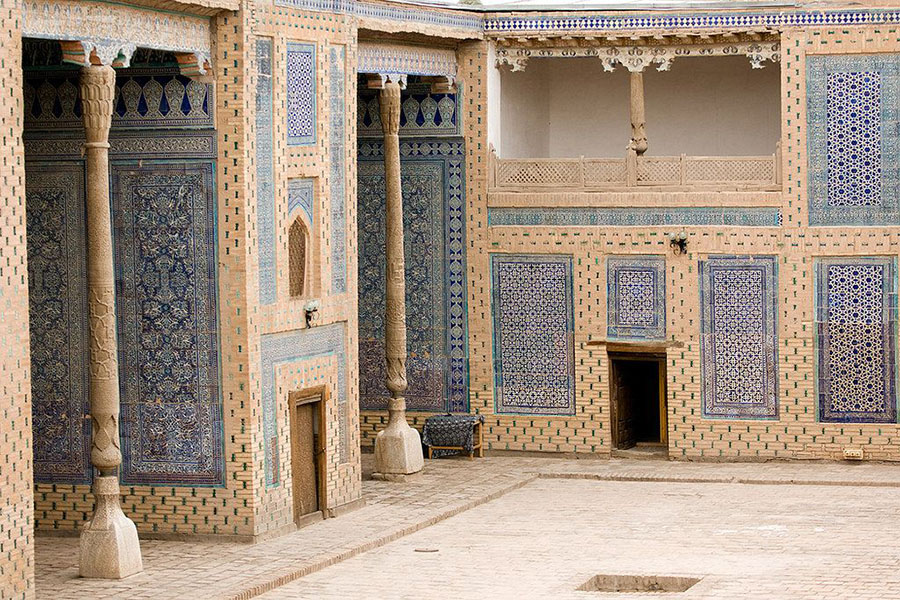
Tash Hauli Palace
The palace is situated in the eastern part of Khiva, and was built by Alla-Kuli-khan. The construction had taken about 8 years, from 1830 till 1838. First, there was built a living quarter for the harem, then mehmonhona the place for official reception, and last was built an arzihona, courtroom. Munis were writing that the best architects of that time were impaled because they refused to build the palace in two years. It took 8 years for Usto Kalandar Hivagi.
In the southern part of harem’s yard were built small aywans, four of which were meant for khan’s wives (according to the Shariat, a man could have no more then four wives), the fifth aywan, abundantly decorated was serving as a living room for khan. In each ayvan there are rooms for servants. The Harem was constructed according to the Khorezm tradition of women side (ichan hauli) formation. There are some details of defensive fortress in the design of the palace, which corresponds the secluded way of life of the harem inhabitants. After the harem was built mehmonhona (ishrat hauli), the square yard with round eminence was built up with rooms and ayvans. The southern ayvan served for messengers reception ceremonies. The ayvans of mehmonhona, decorated with majolica with light covered with drawings ceiling and small towers by the sides, analogous by interior with theater and full of solemn. Arzhona (courtroom) is situated in the South-Western part of Tash Hauli. It is two times bigger then mehmonhona. As well as mehmonhona, arzhona is decorated with majolica. The work was done by the famous master Abdullah, nicknamed Genius. This master was decorating all yards in Tash Hauli. The period of Alla-Kuli-khans governing is characterized by strong power of khan, the successful international politics and progress in trade with Russia. And as a result, there was a possibility to ornate the buildings. The palace of Alla-Kuli-khan is the’most outstanding architectural object of the 19th century. Insignificant restoration works did not changed the peculiarity of the palace, and it can be quite accepted as Khiva architecture of that time.