
 3, Pushkin str., Samarkand 140100 Uzbekistan
  +998 90 655 05 00
  info@sacredeasttravel.com


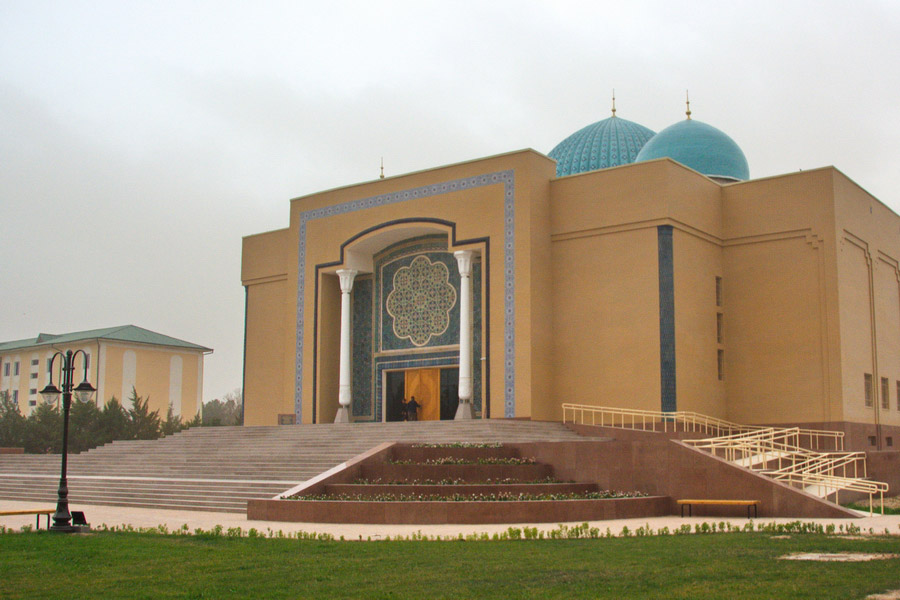
Termez Archaeological Museum
The Termez Archeological Museum was built and opened in 2002 to celebrate the 2500th anniversary of the city of Termez. Today it is the first and only in the Central Asia archaeological museum, many unique exhibits of which are dated researchers more than 100 thousand years BC. Among them there are 624 unique museum relics of world significance. In museum halls they are demonstrated using modern information and communication technologies.
As a result of the ongoing archaeological excavations and research works in the Surkhandarya region, the collection funds of the Museum are constantly replenished with new finds. Today the funds of the Termez Archaeological Museum number more than 76 thousand exhibits, more than 5 thousand of which are exhibited in the demonstration halls. Behind all this is the enormous work of numerous domestic and international archaeological expeditions. The most famous among them are the Tocharistan complex scientific expedition led by Academician E. Rtveladze, Uzbek-Japanese, Uzbek-German, Uzbek-French and Uzbek-Russian expeditions.
In the lobby of the museum are established unique historical statues of stone and gypsum, a stone basin and ceramic vessels (hums) of large size. There is also a relief map of the area, where 20 archeological monuments are marked, referring to different periods of the history of the region. In 9 main halls of the museum are exhibits found in Surkhandarya region, starting from primitive stone tools of primitive man to works of art made by skilled craftsmen. They are arranged in chronological order (from 100 thousand BC to the beginning of the XX century AD). In 2007, under the Termez Archaeological Museum, a branch was opened – the Scientific Center for the Study of the Archaeological Site of Fayaztepe.
The museum also has a scientific library with a modern reading room, numbering more than 17 thousand volumes of valuable books on archeology and history, as well as a conference hall. In addition, there are specially equipped halls for displaying precious metals and stones. Annually, about 50 thousand people visit the museum’s exhibition halls. Excursions are conducted in Uzbek, Russian, Tajik, Persian, English.
The Termez Archeological Museum consists of scientific departments: Department of the Stone Age and Bronze Age. Department of the Hellenistic era and Ancient Bactria. Division of the Kushan culture of Northern Bactria. Department of Early Middle Ages of Northern Tokharistan. Department of the developed Middle Ages. Department of the Khanate period. Department of numismatics.
The scientific staff of the museum conducts active work on the study of archaeological monuments in the territory of Surkhandarya region. Scientific works and articles of leading scientists and historians and archaeologists are studied, scientific articles are published in the press, booklets are issued, translations of valuable manuscripts are made and great attention is paid to the study and preservation of museum exhibits. For numerous guests of the city, foreign tourists and students in the exposition halls of the Museum, thematic exhibitions are held on the results of archaeological research conducted in the Surkhandarya region. Regularly there are also personal art exhibitions for local authors dedicated to various historical and cultural events in the life of the country.
In addition, the Termez Archeological Museum actively participates in republican international exhibitions. Thus, in 2008, 32 local exhibits relating to the culture of Buddhism were demonstrated with great success in museums in 8 Japanese cities.