
 3, Pushkin str., Samarkand 140100 Uzbekistan
  +998 90 655 05 00
  info@sacredeasttravel.com


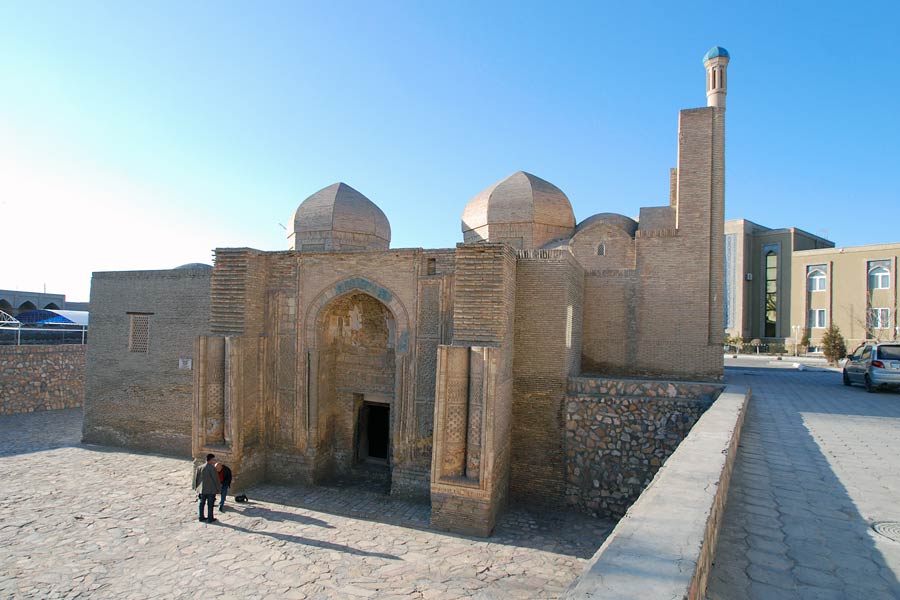
Magoki-Attori Mosque
In the heart of the reserved part of Bukhara is the Magoki-Attori mosque (IX century) – one of the first mosques in the city, which dates back to the pre-Islamic era. On the territory where the mosque Magoki-Attori is currently located – “Mosque in the pit”, in the beginning of our era there was a temple of fire.Near by there was bazaar at this bazaar, spices and medicine were traded, and on the Navruz holiday images of Zoroastrian fertility deities were sold here. When Islam was established in the region, a mosque was built in the ruined pagan temple of fire worshipers. During the archaeological excavations of the 20th century, a group of scientists discovered that the first mosque was erected here in the 9th century. The overlapping of the mosque rested on four bearing layers, the walls of the walls and the remains of the carved decor of the 10th century ganch were preserved. The fire of the end of the 10th century was destroyed by a mosque, and in 12th century a new construction was built on a similar plan, which collapsed in the 15th century, but it also preserved a magnificent southern portal with a unique monochrome decor. Initially Magoki-Attori was a mosque with six pillars and an overlap of 12 domes. The main entrance lay on the long side of the structure and was noticeably offset from the central axis. It stood out by the portal and was designated by an arch, which rested on two carved stone columns. The main decorative material was carved polished brick, from which were drawn patterns in the form of curls, spirals and meanders. The decor of the mosque skillfully combined bricks, a mosaic of terracotta ornaments. On the vertical panels of a small size on the diagonal are laid Arabic inscriptions and relief ghirih (a kind of geometric ornament). The originality of the form and the play of shadows on the patterns laid out of bricks, the ornamental luxury of the southern facade of the mosque speak of the highest craftsmanship of Bukhara artisans of the 12th century. Judging by the inscriptions on the new eastern portal, the revival of the mosque in the sacred territory dates back to the 16th century. To date, the Magoki-Attori portals, decorated with alabaster carvings, majolica irrigation, masonry made of ground bricks and carved terracotta, are masterpieces of architectural decor.