
 3, Pushkin str., Samarkand 140100 Uzbekistan
  +998 90 655 05 00
  info@sacredeasttravel.com


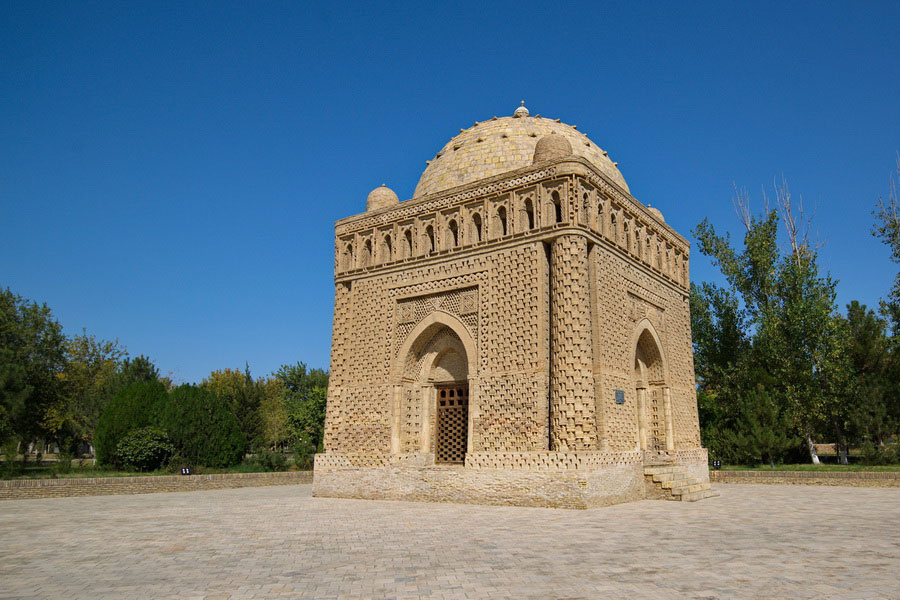
Samanids Mausoleum
Mausoleum located in the historical center of Bukhara, in a park, in place of an ancient cemetery. The mausoleum was built in the IX century (between 892 and 943). Discovered and restored in the XX century. It is one of the architectural masterpieces of Central Asia and the pearl of world architecture.
There are three burials in the mausoleum, one of which belongs to Ahmad ibn Isma’il, the son of Ismail Samani. The graves of Ismail himself, the builder of the mausoleum and the founder of the Samanid dynasty, may not be in the mausoleum. Until the 20th century, the mausoleum was almost entirely covered by a cultural layer. This monument marks the beginning of a new era in the development of Central Asian architecture, reborn after the Arab conquest. It is obvious that the ancient Sogdian traditions continued to develop on ancient lands, but in a new quality: the technique of construction of burnt bricks, its constructive and artistic capabilities, the means of architectural expressiveness are merit of a new time, although they also carry the familiar “sign system” originating from pre-Islamic culture. Having a very small size and height, the mausoleum makes an exceptionally strong impression on the viewer. Undoubtedly, this is a work of the architect-genius. The tremendous effect of building perception is achieved between those extremely simple ways, without significant costs for any decorative finishing materials, such as colored tiles, which are simply not there. The classical form, impeccable proportions and openwork ligatures of decorative brickwork have created a masterpiece by the hand of the master, admired by the peoples of different countries and cultures for several centuries. This mausoleum proves the truth that true art is timeless and understandable and close to any person, regardless of its social origin, education and national culture. Paying due respect to the architect, on whose idea the mausoleum was erected, we should never forget that the strength and durability of the building we owe to the art of unknown master builders.