
 3, Pushkin str., Samarkand 140100 Uzbekistan
  +998 90 655 05 00
  info@sacredeasttravel.com


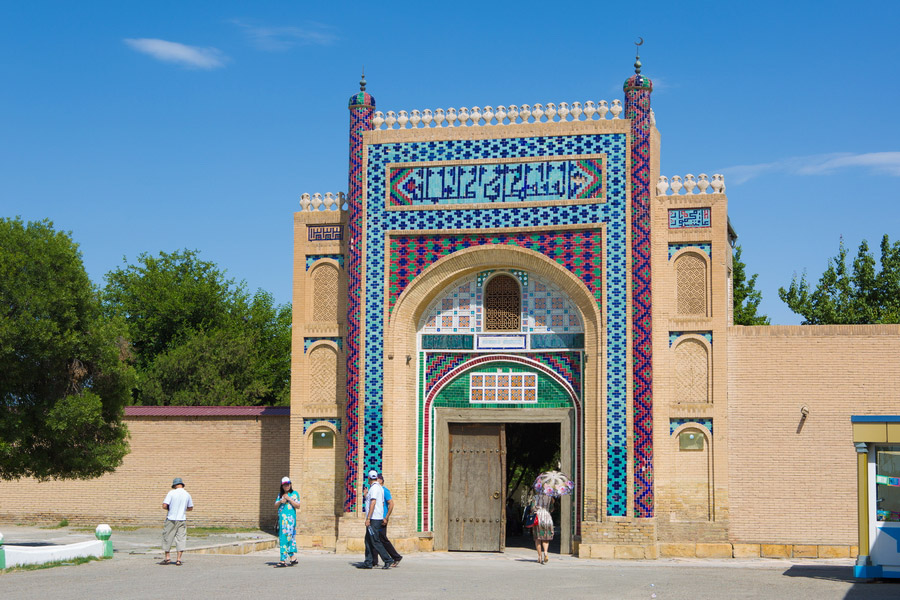
Sitorai Mokhi-Khosa Palace
Palace is a suburban residence of the Bukhara emir, built at the end of the 19th and beginning of the 20th century. Currently, it houses a museum of arts and crafts. The palace is divided into old and new. The palace of Sitorai Mohi Khosa is the summer residence of the last Bukhara emir – Mir Sayyid Alimkhan, built in the late 19th and early 20th centuries, located 4 kilometers north of Bukhara. Currently in the palace there is a museum of decorative and applied art, which was opened in 1927. The palace is included in the UNESCO World Heritage List.
The first buildings of the palace (until our days are not preserved) appeared during the reign of Emir Seyid-Abdul-Ahad-Khan in the second half of the XIX century.
The new complex is built in the European style, but is divided into male and female part, inside is finished in the eastern style. He was raised during the reign of the last emir of Bukhara, Mir Sayyid Alimkhan (1912-1918). The famous masters of his time, Khasanjon Umarov, Abdullo Gafurov, Rakhim Khaetov, Ibrahim Hafizov, Karim Samadov, Usto Zhura, Usto Khodjakul, Shirin Muradov, including two Russian engineers Margulis and Sakovich, who served in the Emir’s court, participated in the construction of the palace. Currently, the palace houses a museum of arts and crafts. The museum was opened in 1927 and consisted of 3 sections: “The Life of the Last Emirs”, “Urban Handicraft”, “The History of the Bukhara Revolution”. The first Uzbek museum expert Musadzhan Saidjanov (1893-1937, arrested as an “enemy of the people” and shot) took an active part in the creation of the museum. In 1933, Sitorai Mohi Khosa became a branch of the Bukhara Museum, was given the status of an inter-regional museum of local lore. The exposition is newly furnished and expanded. Demonstration of the exhibition continued until 1947. Since 1948 the exposition has been called “Folk Art and Art of Bukhara”. And included sections: “Bukhara’s monumental art”, “Applied art”, “Folk musical creativity”, “The art of calligraphy and miniatures” and “Cultural ties of Bukhara with neighboring fraternal states”.
In 1954, the departmental recreation center of the All-Union Central Council of Trade Unions was opened in the palace, the museum was reduced to 9 main halls from the entire palace complex. The exhibition was named “The Museum of Folk Art”.
Currently, the Palace Complex houses the Museum of Decorative and Applied Arts.