
 3, Pushkin str., Samarkand 140100 Uzbekistan
  +998 90 655 05 00
  info@sacredeasttravel.com


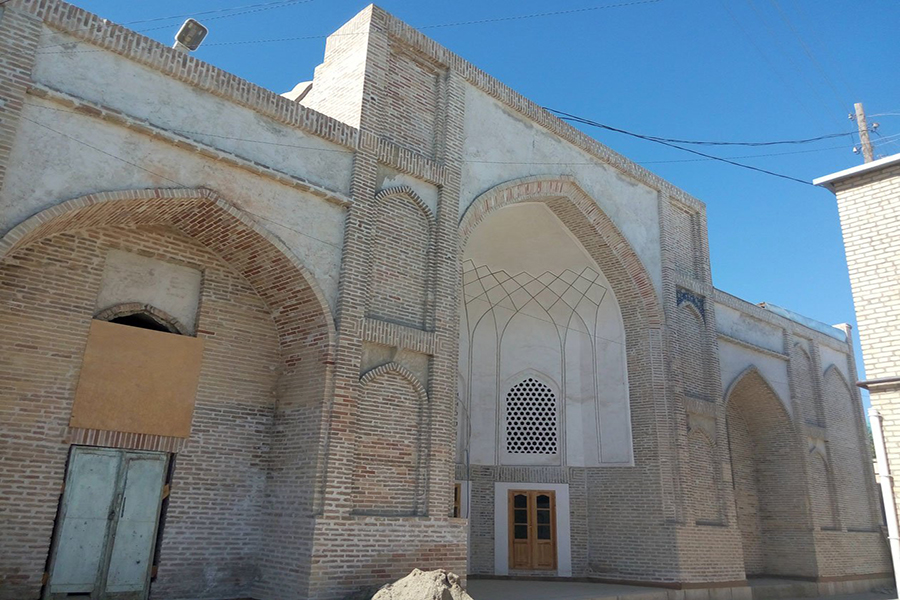
Khanaka Khoji Zainuddin
Khanaka Khoja Zaynuddin served as a khanaqa, and a gusar mosque, and a mazar of Sheikh Zaynuddin. The builders of the mosque took into account the peculiarities of its location in the residential quarter. Here in the XIX century was laid out with stone slabs of houses, which supplied residents of the quarter and parishioners with drinking water. The southern facade of the building contains the deepest niche – the genus of an open portico, as if absorbing parishioners and enthralling them through shady passages in the semi-marble. The sheikh’s grave rises in a special niche of the western facade facing the street, which is unusual for the burial of the “saint.” From the side of the courtyard of the khanaka, it is surrounded by two facades by aivan with columns with stalactite capitals and marble bases. Slender graceful columns, partially replaced in the XIX century, support a set of wooden ceiling of the XVI century. The main dome room is rectangular, extensive, tall rich polychrome decoration decorates the hall from the bottom to the top of the dome. The figure (now reddish and blue, formerly gilded or on a gold background) conveys only to a small extent that exceptional effect that was achieved thanks to the kundal technique. Excellent and mosaic panel of the mosque, dissected into individual rectangular fields filled with geometric figures, as well as graceful arches with abundant color patterns. Architecture is traditional and goes back to the oldest examples of folk architecture of the feudal era. In the courtyard in front of the aivan there is a swimming pool with stone ledges and a carved stone outflow. Since the XIX century khanaka performs the role of a quarterly mosque.