
 3, Pushkin str., Samarkand 140100 Uzbekistan
  +998 90 655 05 00
  info@sacredeasttravel.com


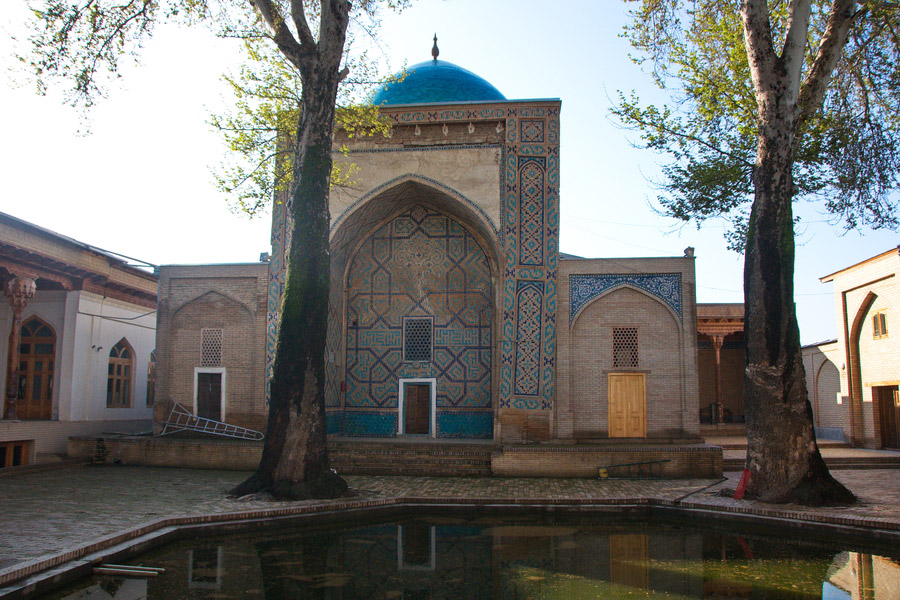
Abdi-Darun ensemble
(Abdu-Darun) is a complex of memorial, cult and spiritual-enlightenment facilities in the Old Cemetery of Samarkand (Republic of Uzbekistan), established in the 12th-20th centuries near the tomb of the famous Islamic jurist of the 9th century Abd-al-Mazeddin. The ancient core of the ensemble is a mausoleum of the XII century, near which at different times were built khanaka, mosque and madrassah. The radical reorganization of the ensemble, which significantly changed its appearance, was carried out in the 15th, 19th and 20th centuries. The Abdi-Darun Ensemble is one of the most revered shrines of Islam in Central Asia.
Islamic jurist Abd-al Mazeddin, better known in Maverannahr as Khodja Abdi, was known as an expert in Sharia and was one of the most respected Kazi in Samarkand. He died about 861 and was buried in the Muslim tradition in the garden of his vast estate, located in the south-eastern part of Samarkand near the fortress wall of the outer city. Regarding the origin of Abd-al-Mazeddin, the sources vary. Abu Tahir-Khoja in his book “Samaria” calls him the son of a certain Khodja Muhammad Yakub and grandson of Khoja Abu ibn Usman. At the same time, the Islamic theologian Abu Hafsa Najmeddin Umar in the “Candia” leads his bloodline to the caliph Usman and, accordingly, to the Prophet Muhammad himself. Probably talking about the relationship of Khoja Abdi with the prophet caused the emergence of his cult.