
 3, Pushkin str., Samarkand 140100 Uzbekistan
  +998 90 655 05 00
  info@sacredeasttravel.com


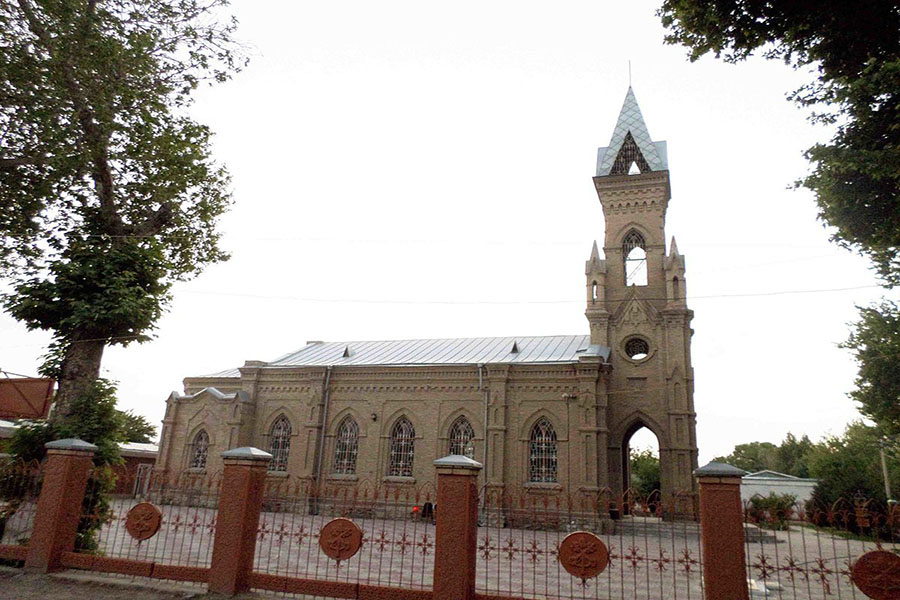
The Catholic Church of St. John the Baptist in Samarkand
The Catholic Church of St. John the Baptist in Samarkand was built in 1915 at a time when a large number of prisoners of war, Poles, Hungarians and Austrians arrived in the city. They sent a request to the mayor’s office for permission to build, and soon a majestic church building appeared in Samarkand. However, after the Communist coup in 1917, the church was closed and the building was used for other purposes. The government of independent Uzbekistan proclaimed freedom of religion, and Catholics were able to restore the church. In 1995, at the initiative of priest John Roloff, a Catholic parish was registered in Samarkand, which in 1997 was transferred to the church of St. John the Baptist.
In March 1999, the consecration of the church took place, and since that time everyone has the opportunity to hear the Mass in Nanetzic, English and Russian languages. The architecture of the Catholic Church evolved in the Romanesque style. The church resembles a fortress with massive, thick stone walls and fortifications. The Catholic Church was built in two architectural styles: Classicism and Baroque. Inside the building there is an altar, a huge icon from the floor to the ceiling, and a huge crucifix. There is a sculpture of Christ, the Mother of God. Religion is the embodiment of tradition. The creation of the Church is the first great work of Christian architecture. The development of church architecture began almost immediately after the victory of Christianity over paganism. The architecture of the churches of Western countries has become the canon of architecture in general. The latest tendencies of architecture initially tried to build a church, and then used in the designs of various institutions. The architecture of Christian churches should consist of two main buildings: an extensive hall for the assembly of believers, and aside from the entrance there is the space of the altar where worship is performed.