
 3, Pushkin str., Samarkand 140100 Uzbekistan
  +998 90 655 05 00
  info@sacredeasttravel.com


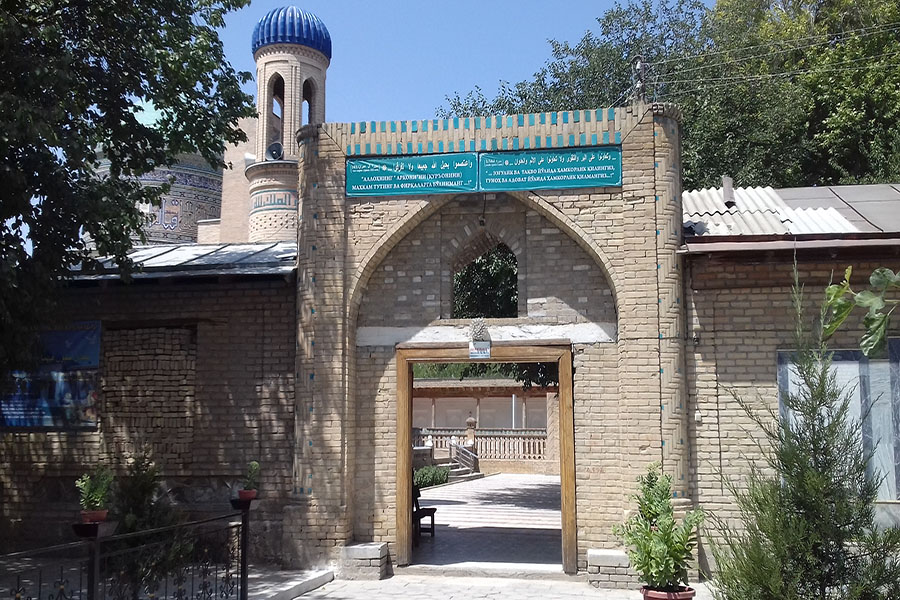
Abdu-Berun ensemble
This plan, the facade and the section of the Khoja Abdu-Berun memorial complex in Samarkand (Uzbekistan) is contained in the archaeological part of the Turkistan album. A six-photographic photographic study was conducted in 1871-1872. under the leadership of General Konstantin P. von Kaufman, the first governor-general (1867-1882) of Turkestan, as they called the territory of Central Asia, which belonged to the Russian Empire. The album pays special attention to the Islamic architectural heritage of Samarkand. The memorial complex of Khoja Abdu-Berun (khanaka) is dedicated to the Arab judge of the Abdi tribe, revered in the 9th century. The word “Berun” (external) is added to the name to indicate the location of the complex near the cemetery on the outskirts of Samarkand, and also to distinguish it from another complex dedicated to the sage that was located within the city limits. Khanaka was built in the first half of the 17th century by Nadir Diwan-Begi, the vizier of the Bukharian ruler Iman-Kuli Khan. The layout of the ensemble includes a domed mausoleum (mazar), a summer mosque (on the right), a pool with a stream and a separate entrance to the main courtyard. The incision shows that the dome of the mausoleum has a double construction with an internal frame and an outer dome, raised on the cylinder. Also here is the arch of aivan (a vaulted hall with one open end, surrounded on three sides by walls) with a niche and an entrance. In the lower part is a section of the summer mosque. The sections of the stone walls are indicated in red.